
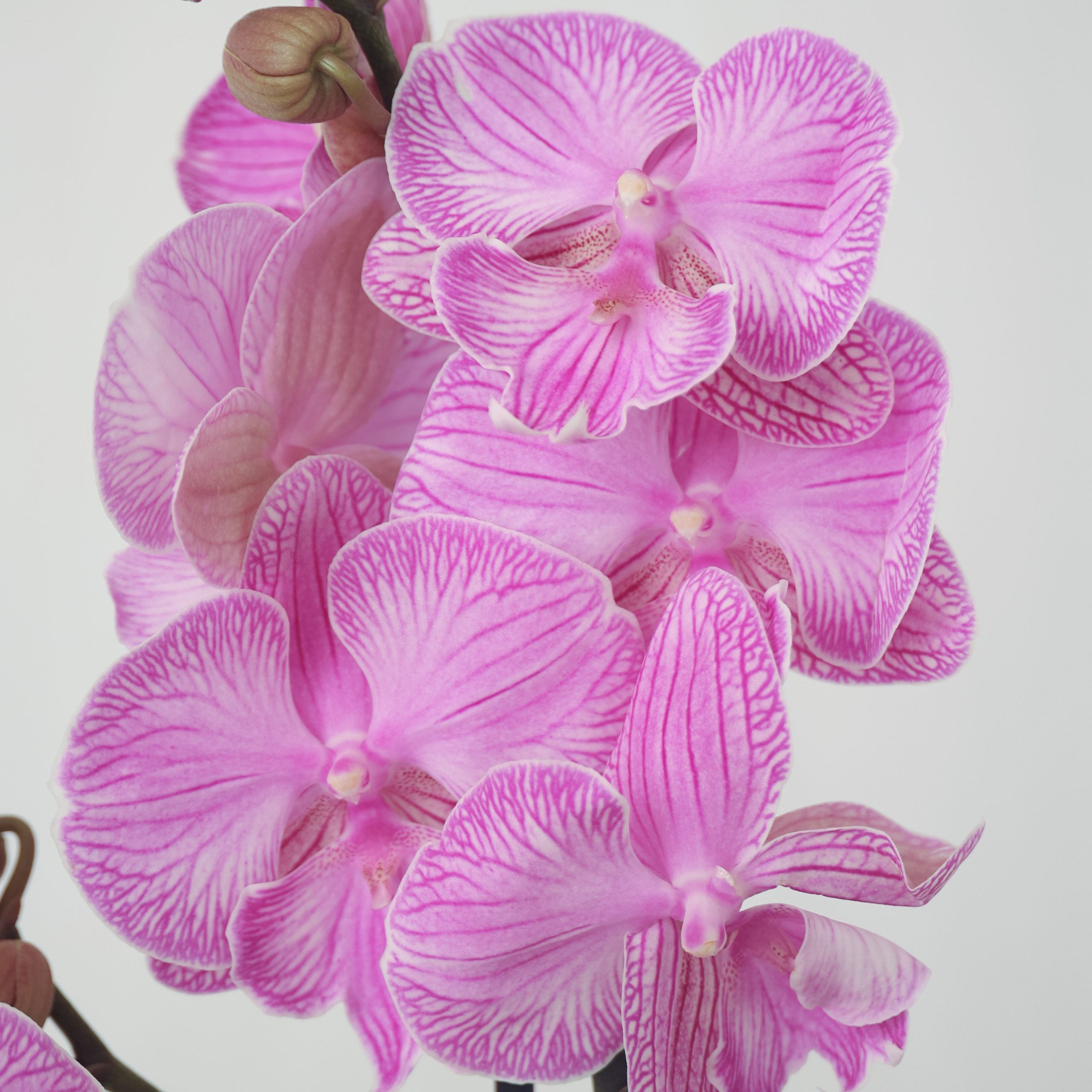
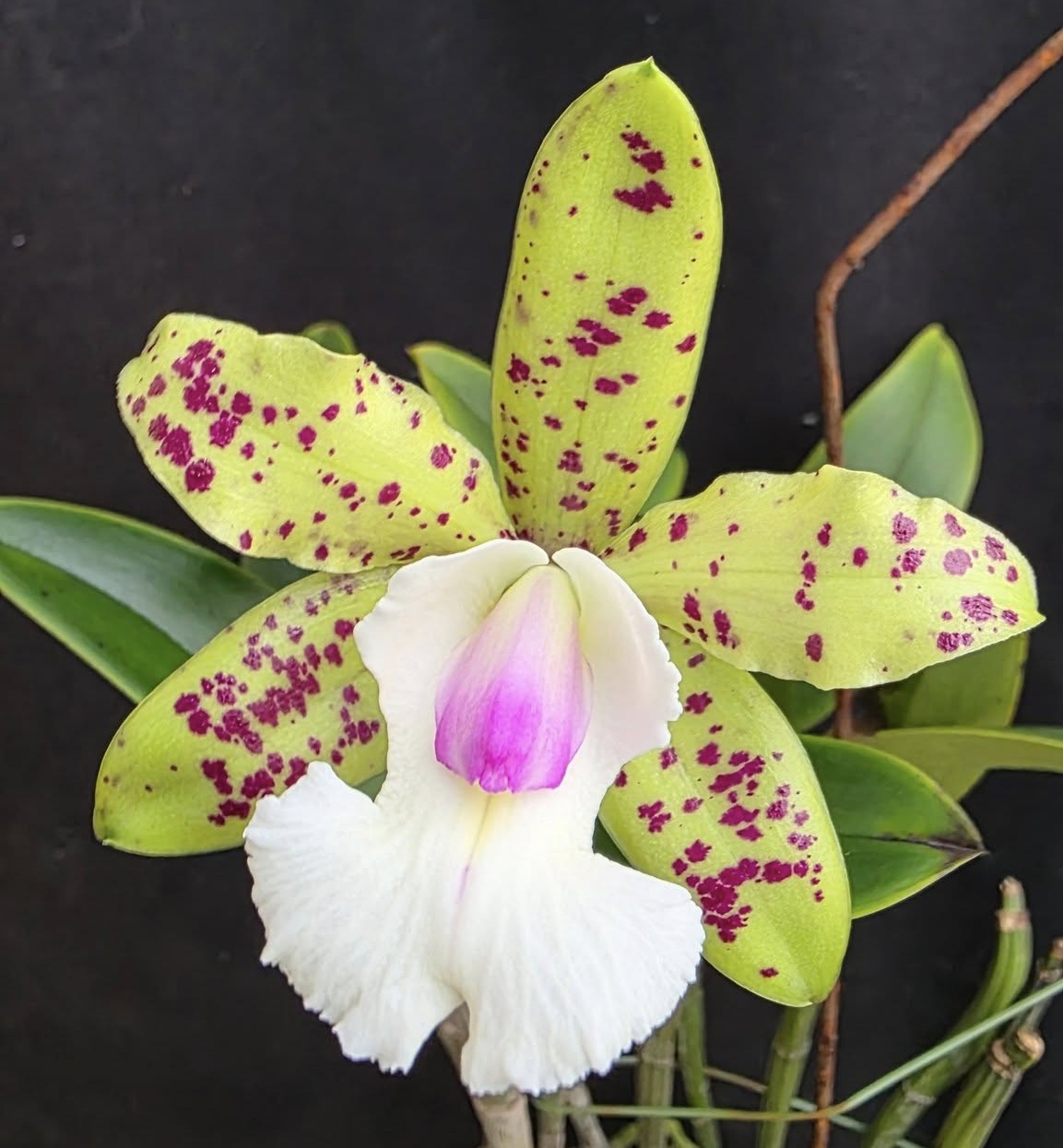
Step into the world of heirloom orchid hybrids with Phalaenopsis Natasha ‘Aeiko’ AM/OSROC, a celebrated, classic waxy novelty Phalaenopsis that has captivated connoisseurs for over five decades. Prized for its intoxicating fragrance, uniquely patterned blooms, and remarkably heavy, long-lasting flowers, this is not your everyday grocery-store moth orchid. Award-Winning Pedigree: The Cross:A primary hybrid of two powerhouse parents: Phalaenopsis gigantea × Phalaenopsis Origin:Registered by I. Dobkin in 1971 and named after her granddaughter. The Award:The suffix AM/OSROC signifies an Award of Merit from the Orchid Society of the Republic of China (the historical orchid society of Taiwan)—a mark of exceptional floral quality. Breeding Legacy:For decades, this specific clone was notoriously difficult to breed. Modern mutations and successful re-cloning efforts by elite Taiwanese nurseries (such as Chin Yo) have finally made this legendary plant available to dedicated collectors and hybridizers. Flower & Plant Characteristics: Blooms:Thick, glossy, waxy flowers (a direct inheritance from gigantea) displaying a stunning blend of cream, white, or pale green-yellow backgrounds, heavily barred or spotted with saturated pink, maroon, or brownish tones. No two flowers are exactly alike. Fragrance:Strong, sweet, and highly fragrant—a dominant trait passed down from its species ancestors. One spike can perfume an entire room. Foliage:Large, wide, somewhat leathery green leaves that reflect its gigantea The plant has a commanding, substantial presence even when not in bloom. Longevity:Waxy texture means individual flowers last for weeks to months under proper conditions. Core Culture & Care Requirements: Due to its 50% Phalaenopsis gigantea genetics, this hybrid requires slightly warmer and more attentive care than standard mass-market Phalaenopsis. Recommended for intermediate to advanced growers. Light:Bright, indirect light (e.g., east or shaded south window, or under LED grow lights). Avoid direct midday sun, which will quickly scorch the broad leaves. Temperature:Intermediate to warm conditions. Ideal daytime range: 18–27°C (65–80°F) . Do not allow prolonged temperatures below 15°C (60°F) . Watering:Water thoroughly when the potting medium is almost completely dry. Use the “pot weight” or “clear pot root” method: Dense sphagnum moss: Allow to dry well before watering moderately. Coarse bark: Water heavily and allow to drain fully. Critical: Never allow water to collect in the crown (center where leaves join). This causes fatal crown rot. Humidity:Maintain 50–70% relative humidity with gentle, continuous air movement (a small fan is ideal). This prevents fungal issues and mimics its tropical origins. Potting Medium:Use a coarse, airy mix (large bark, perlite, charcoal). It dislikes soggy, compacted media. Fertilizer:Feed weekly weakly (¼ strength balanced orchid fertilizer) during active growth. Reduce feeding in winter. Repotting:Repot every 1–2 years or when media breaks down. Best done after flowering. Handle roots with care. Perfect For: Serious orchid collectors, novelty Phalaenopsis enthusiasts, and hybridizers seeking proven genetic material. Not recommended for absolute beginners unless you are willing to provide warm, humid, and well-ventilated conditions. Why You Want This Plant: You are not just buying an orchid. You are acquiring a piece of horticultural history—a legendary, fragrant, waxy-leaved masterpiece that performs as beautifully as its reputation promises. When this plant spikes, you’ll understand why collectors have chased ‘Aeiko’ for generations.